
What is a boundary trap?
If you've ever wondered "what is a boundary trap in plumbing?" You're not alone. I get asked about it at least once a week. It's one of those things most homeowners walk past every day without knowing what it does. But when it goes wrong, you'll know about it pretty quickly.
So what actually is it?
A boundary trap is a small pit, usually concrete, sometimes PVC, buried in your front yard near the property boundary. You'll spot it by its round or square lid sitting flush with the ground, often near the front fence or nature strip.
Its job is simple but important. It's the last stop for all the wastewater leaving your house before it enters the council sewer main under the street. Every drain in your home (kitchen, bathroom, laundry, toilet) all flows through your pipes and out through the boundary trap.
How does it work?
Inside the boundary trap there's a water seal, a U-shaped bend that holds water, just like the trap under your kitchen sink. That water seal stops sewer gases from travelling back up through your pipes and into your home. Without it, you'd smell raw sewage every time you walked past your front yard.
The wastewater flows in from your house drains, passes through the trap, and continues out to the council sewer. It's gravity-fed, so it relies on proper fall in the pipes to keep everything moving.
Why it matters
When the boundary trap is working properly, you never think about it. But when it blocks up, things get unpleasant fast. Sewage can back up into your lowest fixtures, usually the shower or laundry floor waste. I've seen it flood entire bathrooms.
The most common cause of boundary trap blockages? Tree roots. Older clay pipes are especially vulnerable. Roots find the tiniest crack, get in, and grow until the pipe is completely choked. I've pulled root masses the size of a football out of boundary traps.
Common problems I see
After 40 years of plumbing in Melbourne, I've cleared thousands of boundary traps. Here's what causes most of the grief:
Tree roots are by far the number one issue. Certain trees are worse than others. Willows, liquid ambers, and fig trees are notorious.
Grease build-up. Cooking fats and oils solidify in the trap over time, narrowing the pipe until it blocks completely.
Foreign objects like wet wipes, sanitary items, and kids' toys. If it shouldn't go down the drain, it usually ends up caught at the boundary trap.
Collapsed pipes. In older Melbourne homes with original clay pipes, age and ground movement can crack or collapse sections.
Inspection and maintenance
You can lift the lid yourself to do a visual check. If you see standing water sitting well above the outlet pipe, there's likely a blockage downstream. If the trap is dry, the water seal has broken, and that means sewer gases can come back up.
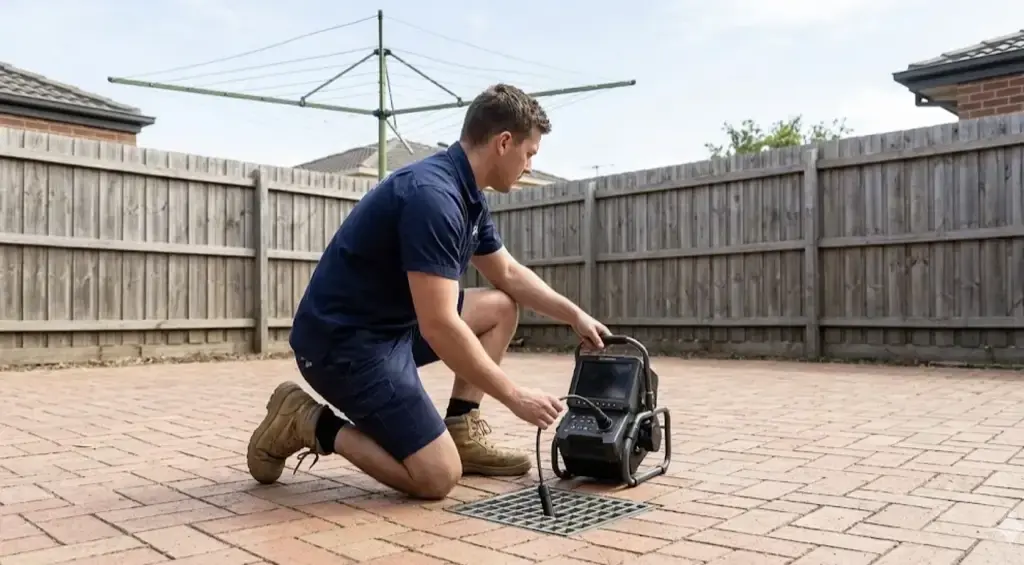
I recommend getting your boundary trap inspected every couple of years, especially if you've got large trees nearby. A CCTV drain camera can show exactly what's going on inside the pipe without any digging.
Who's responsible: you or the council?
This catches a lot of people out. You're responsible for everything from your house to the boundary trap, including the trap itself. The council (or your water authority, Melbourne Water in most cases) is responsible for the sewer main from your boundary trap to the street.
If the blockage is in your section, it's on you to get it fixed. If it's in the council main, they'll sort it out, but you need to call them and report it.
When to call a plumber
If drains are slow throughout the house, or you notice a sewage smell near the front yard, it's worth getting it looked at sooner rather than later. A simple jet blast to clear the boundary trap takes about 30 minutes and saves you from a much bigger mess.
Have a look at our blocked drains service page for more detail on how we sort these out.
If you reckon your boundary trap might be playing up, give me a call on 0418 340 501. I'll come out, have a look, and give you an honest answer.